Struggling with knee pain when you run? You’re not alone. Knee pain is one of the most common injuries we see in runners at Cole Harbour Physio, and it can be incredibly frustrating—especially when running is a key part of your routine.
During our recent Running Injury Prevention Workshop, our physiotherapist, Maude Marchand, broke down why the knee is often the victim, not the problem, and what runners can do to reduce pain and prevent injury.
Why Knee Pain Is So Common in Runners
The knee sits between the hip and the ankle. Unlike other joints, it relies heavily on the joints above and below it for proper alignment and load distribution.
If the hips, ankles, or feet are weak or lack mobility, extra stress is transferred to the knee. Over time, this can lead to pain—especially with the repetitive nature of running.
Running is unique in that:
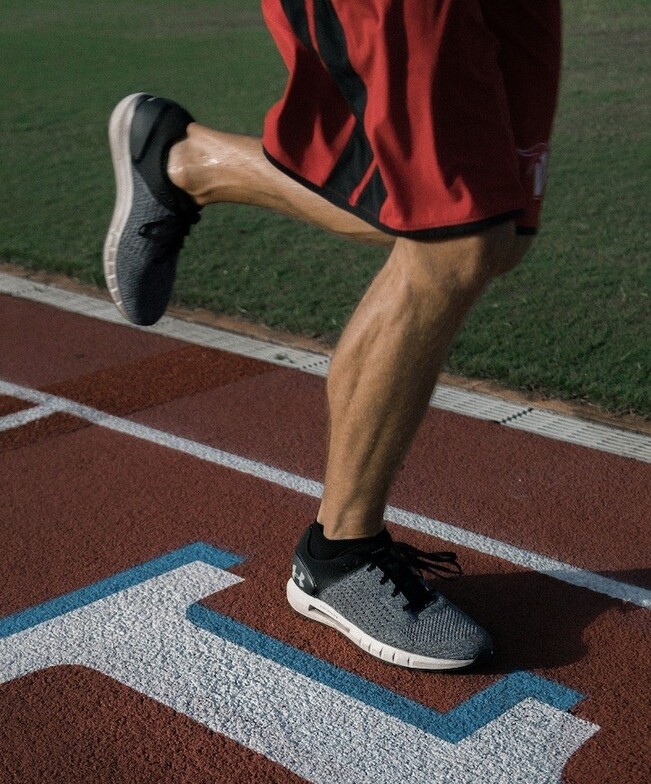
- You are on one leg at a time, 100% of the time
- Each stride places repetitive load through the same tissues
- Single-leg balance and control are essential for injury prevention
Common Types of Running-Related Knee Pain
Many runners experience pain in different areas of the knee, including:
- Kneecap (patellofemoral) pain
- IT band–related knee pain
- Quadriceps tendon pain
- Patellar tendon pain
Although these conditions involve different structures, they often share similar root causes, such as poor movement control, strength deficits, or training errors.
How Weakness and Movement Patterns Affect the Knee
When the glute muscles are weak, the thigh can rotate inward during running. This often appears as the knee “caving in” with each step.
Similarly, weakness in the foot and ankle muscles can lead to excessive pronation, which also drives the knee inward and increases joint stress.
Key movement patterns we assess include:
- Knee alignment during single-leg tasks
- Balance and control on one leg
- Pelvic and trunk stability while running
Running Technique and Cadence: Why It Matters
Running technique plays a major role in knee loading.
- Low cadence (fewer steps per minute) increases impact forces and places more stress on the knee
- Higher cadence reduces impact and allows the posterior chain (glutes and hamstrings) to contribute more effectively
A commonly used target is around 180 steps per minute, which often encourages the foot to land closer under the hips rather than out in front, reducing braking forces and knee strain.
Shoes and Knee Pain: What’s the Difference?
Footwear choice can also influence where stress is placed in the body:
- Maximalist shoes tend to shift load toward the knee, hip, and lower back
- Minimalist shoes place more demand on the foot, ankle, and posterior chain
There is no “perfect” shoe—what matters most is choosing footwear that suits your body, strength, and running goals.
Overuse Injuries: The “Too Much, Too Soon” Trap
One of the most common causes of running-related knee pain is increasing training volume too quickly.
A general guideline when starting or returning to running is:
- Increase total running volume by no more than 10% per week
Strength training, combined with proper recovery—sleep, nutrition, and stress management—is essential for keeping tissues healthy and resilient.
Key Assessments and Exercises for Runners With Knee Pain
At Cole Harbour Physiotherapy, we often assess and address the following:
Single-Leg Control
- Single-leg squat: does the knee cave inward?
- Is there excessive trunk or shoulder shift?
Quadriceps Flexibility
- Proper quad stretching with pelvic control to target the muscle effectively
Calf Strength
- Runners should aim for 20+ controlled single-leg calf raises
- Slow tempo (4 seconds up, 4 seconds down) for endurance
Hip Abductor Strength
- Single-leg stance while pushing the knee outward against a wall
Foot Strength and Arch Control
- Foot tripod awareness (heel, base of big toe, base of small toe)
- Toe control drills (big toe up, others down—and switch)
These elements are then integrated into functional movements such as squats and running-specific drills.
Should You Run With Knee Pain?
This is one of the most common questions we hear.
Mild pain that does not worsen during or after running:
-You may be able to continue running while addressing the underlying causes with physiotherapy guidance.
Pain that increases during or after running:
-It’s best to stop and seek assessment to prevent longer-term injury.
A physiotherapy assessment can help determine why your knee hurts and what you need to do to return to running safely.
Book a Running Injury Assessment in Dartmouth, NS
If knee pain is limiting your running—or you want to prevent injury before it starts—our physiotherapists are here to help.
Cole Harbour Physiotherapy 1153 Cole Harbour Road Dartmouth, Nova Scotia, B2V 1E8
902-462-6492
admin@chphysio.ca