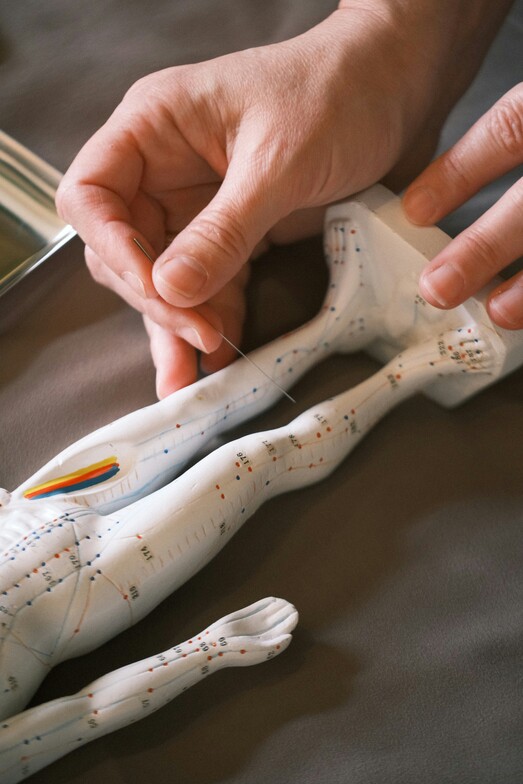
So many clients come to me saying, ‘My body feels broken—nothing is working.’ And I understand why it feels that way.
But from my experience the body isn’t broken, it’s communicating. I often see people who have “tried everything.” They’ve had massage, physiotherapy, chiropractic care—sometimes even acupuncture—and yet something still isn’t shifting. This is usually the moment I gently suggest: it might be time to widen the lens. Because while manual therapies can be incredibly effective, there are times when the body is asking us to look deeper—not just at muscles and joints, but at the emotional and nervous system layers that live within them.
Your Body Is Communicating—Not Failing
We’re often taught to think of pain as something to fix or get rid of. But what if pain is a message? Your body holds onto experiences—especially the ones that felt overwhelming, unsafe, or never fully processed. And instead of “thinking” those experiences through, the body expresses them through sensation. This is something explored in fields like somatic psychology—the idea that the body and mind aren’t separate, and that emotions can show up physically. So when something isn’t improving, even after good physical treatment, it can be helpful to ask:
What else might be going on here?
A Real Example I had a client this week with long-term tightness in her neck and throat. She’s someone who feels things very deeply—what many people might call “highly sensitive.” When you don’t fully understand that sensitivity, it can show up as anxiety or tension in the body. As I worked with her, I didn’t just focus on the muscles. I paid attention to the feeling of the area. What came to mind was this image: her neck felt like it was almost floating—like it didn’t want to be fully connected to her body. When I gently shared that, something clicked for her. She started to tear up. Not because we went into a long story—but because her body felt seen. From there, we simply slowed things down and helped her reconnect, in a way that felt safe and manageable.
Another Example: When the Body Stays in Protection Mode Another client came in with persistent tightness through her shoulders and upper back—especially around the shoulder blades and traps. She had tried multiple treatments, but the tension kept returning. When we explored it more gently, something became clear: her body was holding a protective pattern. If you imagine someone about to throw something at you, what do you instinctively do? You hunch forward. You lift your shoulders. You guard your heart. Her body had learned to stay in that position. Not because anything was currently happening—but because at some point, it had needed to. As we brought awareness to that pattern, her body began to soften—not through force, but through understanding. That’s often the shift: from bracing… to feeling safe enough to let go.
Making Sense of “Energy” (Without the Woo)
Sometimes people hear words like “energy” and feel unsure about it. But you don’t have to think of it in a mystical way. Your body is constantly sending signals—through your nervous system, your breath, your heart rate. Science fields like neuroscience show how closely linked your physical sensations and emotional states really are. So when I talk about “tuning in,” I’m really talking about noticing patterns, sensations, and responses that are already there.
Common Patterns I See
Over time, certain areas of the body tend to tell similar stories:
Shoulders & Upper Back A protective, guarding pattern—especially after stress or feeling unsafe.
Hips & Sciatica The hips help us move forward. When people feel stuck in life, this area can become tense or painful.
Knees Knee’s support us. When life feels unsupported, this can sometimes show up here.
Jaw The jaw is closely tied to expression. It is the gate way between the heart and the mind. Clenching or tightness can come from holding back words, emotions, or even decisions.
You Don’t Have to Relive Everything One concern people often have is: “Does this mean I have to talk through everything I’ve been through?” Not at all. In fact, a lot of this work doesn’t involve storytelling. Instead, we focus on sensation—what you’re feeling in the moment—and gently allow the body to process it in its own way. This approach is where healing happens through the body, not just through talking.
A Different Way of Healing We’re used to trying to fix the body. But sometimes, what creates the biggest shift is learning to listen to it. When we include both the physical and emotional sides of healing, things often start to change in a way that feels more natural—and more lasting.
If You’re Feeling Stuck If you’ve been dealing with something that isn’t improving, even after trying different treatments, it might not mean anything is wrong with you. It might just mean your body is asking for a different kind of attention.
A slower one.
A deeper one.
A more connected one.
Amanda Gorman
Contact Me